November 15, 2026
The regenerative agriculture conversation has matured considerably. Cover crops, no-till practices, carbon sequestration, and soil health have moved from the margins to the mainstream, and the industry is better for it. Yet a meaningful gap persists. One that deserves more attention than it's receiving.
Seaweed-based biostimulants — biological inputs backed by decades of peer-reviewed research and regulatory approval in key global markets — are largely absent from the regenerative toolkit being assembled today. Shannon Wentz, Global Director of Sustainability at Acadian Seaplants, has watched this play out firsthand.
“As the conversation around regenerative agriculture continues to evolve, I believe we're overlooking an important part of the solution. Biologicals and biostimulants have a significant role to play in supporting soil health, crop resilience and productivity, yet they aren't consistently recognized as part of the regenerative agriculture toolkit. That's a missed opportunity.”
Shannon Wentz
Global Director of Sustainability

Regenerative agriculture is, at its core, a soil health proposition. Its goal is to rebuild biological activity, restore nutrient cycling capacity, and reduce long-term dependence on synthetic inputs. These are precisely the conditions that seaweed-based biostimulants are designed to support.
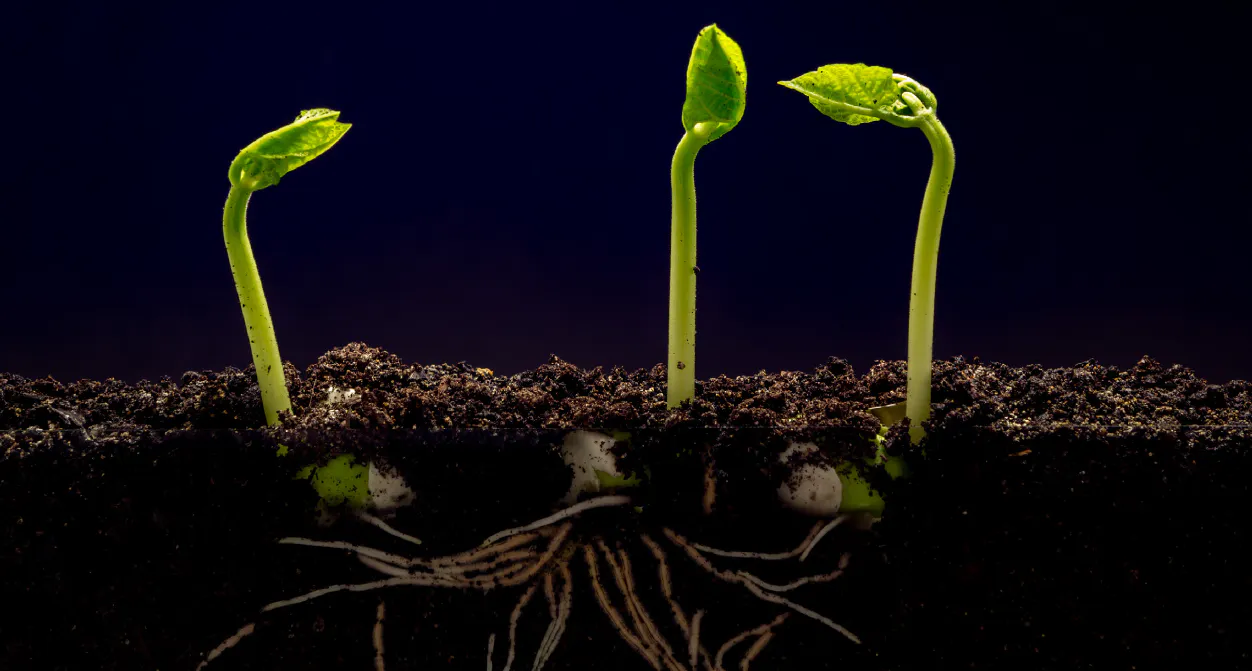
New soil applied Ascophyllum nodosum-based technology do not feed the plant in a conventional sense. They activate the system around it by increasing root growth and boosting production of beneficial components which thereby stimulates microbial communities, strengthening mycorrhizal networks, improves organic matter accumulation and the plant's capacity to access nutrients under stress. Applied with consistency, they build the biological foundation that regenerative agriculture is working toward. The root system becomes more productive. The soil ecosystem becomes more responsive. The crop enters each season and each stress event from a position of greater resilience. As Wentz puts it: “It's the root of regenerative agriculture.”
Acadian has been building and validating the science around Ascophyllum nodosum for more than 45 years. From the recent CE Mark regulatory approval for the first product in its Abiotic Stress Management portfolio in Europe, to strategic partnerships with leading global crop protection companies, Acadian’s focus is on demonstrating rigorous, reproducible efficacy.
Wentz is direct about the high standard this requires. The science is established. The proof points are real. What the industry has yet to fully reckon with is the connection between what biostimulants accomplish at the soil level and what regenerative agriculture is trying to achieve at the systems level.
That gap is where the next phase of the regen ag conversation begins.